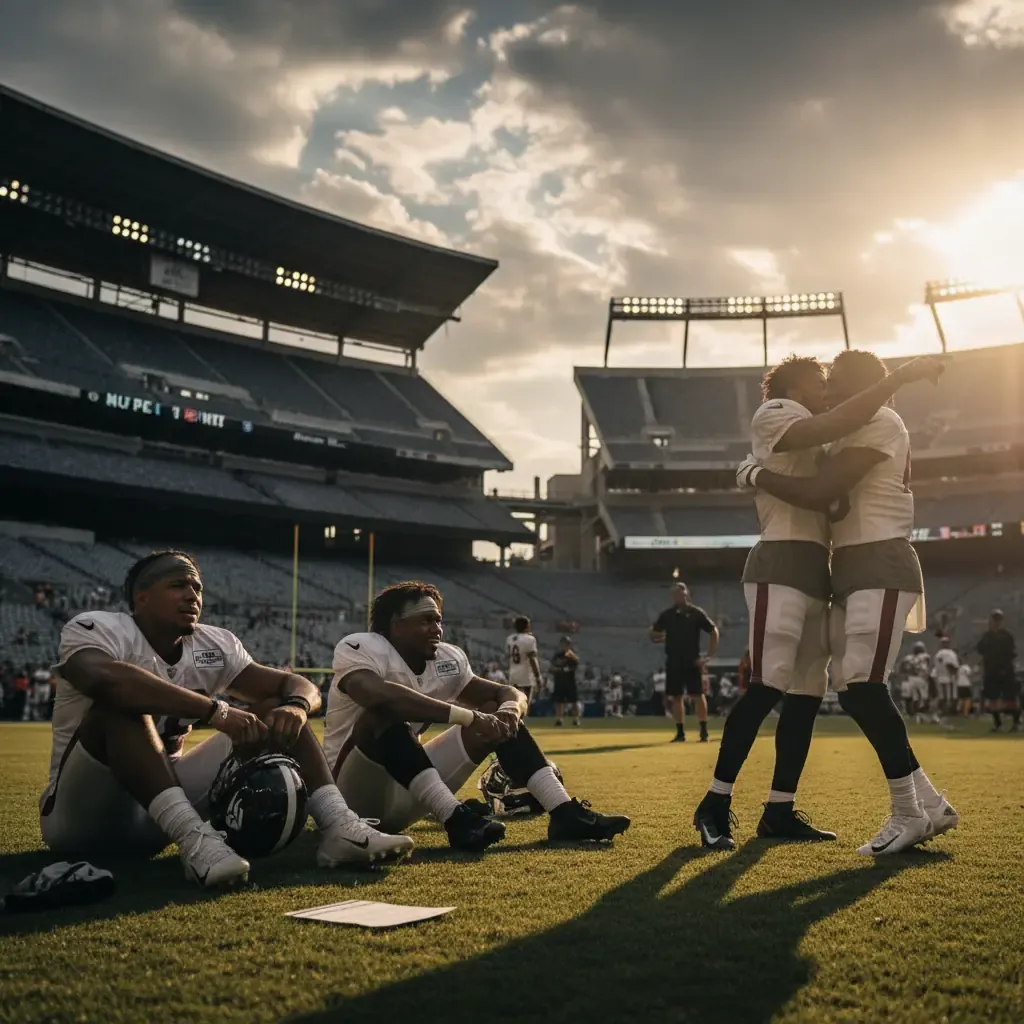

The air crackles with anticipation. Dreams hang precariously in the balance. This is NFL cutdown day, a brutal crucible where months of relentless training culminate in the cold, hard reality of the 53-man roster. For some, it’s a moment of triumph, the realization of a lifelong ambition. For others, it’s a devastating blow, the shattering of a dream meticulously built through sweat and sacrifice.
This year’s NFL roster cuts were no exception, delivering a tidal wave of shock and strategic realignments across the league. Veteran quarterbacks found themselves unexpectedly on the chopping block. Promising rookies failed to make the cut. Established players were released in favor of younger, cheaper alternatives. The decisions sent ripples through team strategies, instantly altering perceived strengths and exposing potential vulnerabilities.
Among the most surprising NFL roster cuts was the release of several key players. The unexpected release of veteran defensive end, a linchpin of their defensive line, left analysts and fans alike scratching their heads. Similarly, the decision to waive a highly touted rookie wide receiver raised questions about the team’s evaluation process. It’s a jarring reminder that in the NFL, past performance and potential are never guarantees of future success. This article will dissect these surprising NFL roster cuts, providing expert insights into the rationale behind these difficult decisions and what they mean for the teams moving forward. Welcome to the other side of the field.
Understanding the NFL Roster Cut Process
The NFL roster cut process is an annual event where teams reduce their rosters to the league-mandated limit. This process is governed by specific NFL roster rules and deadlines, shaping team compositions before the regular season begins.
Typically, teams must trim their rosters down to the 53-man roster limit after holding 90 players during off-season workouts and training camp. The exact dates for these cuts vary each year but usually happen in late August. These adjustments are crucial for setting the stage for the upcoming season.
When a player is cut, they are either waived or released. Being waived means that other teams can claim the player; if claimed, the new team takes on the player’s contract. If the player clears waivers—meaning no team claims them—they become a free agent and are free to sign with any team.
The waiver system prioritizes teams with the worst record from the previous season, allowing them to improve their roster. This system gives struggling teams an opportunity to acquire potentially valuable players without having to negotiate a contract.
Beyond the 53-man roster, teams can also establish a practice squad, composed of players who do not count against the active roster limit but can practice with the team and provide depth. Rules govern the eligibility, including limitations on the number of accrued seasons a player can have to be eligible for the practice squad.
Injured reserve (IR) is another critical component of roster management. Players placed on injured reserve are ineligible to play for a specific period, allowing teams to temporarily replace them on the active roster. There are rules about when and how players can be placed on and return from injured reserve, adding another layer to roster strategy.
Surprising Cuts and Their Backstories
The NFL roster deadline always brings a whirlwind of activity, but it’s the unexpected cuts that truly grab attention. These aren’t the fringe players battling for a spot; these are established veterans or promising prospects who suddenly find themselves on the outside looking in. Let’s dissect some of the most surprising cuts from this year and explore the potential reasons behind these tough decisions.
The Shocking Release of Veteran Wide Receiver, Marcus “The Hammer” Hamilton
Marcus “The Hammer” Hamilton’s release sent shockwaves through the league. A seven-year veteran, Hamilton was known for his reliable hands and physicality. His recent performance hasn’t been stellar, but he was expected to provide a steady presence in the receiving corps. The Hammer, since his rise to fame, has had 400 receptions, with over 5,000 receiving yards and 30 touchdowns. The team’s decision likely came down to a combination of factors. First, his cap hit was significant, and the team needed to free up salary. Second, younger receivers demonstrated more explosive plays during training camp for, maybe, a better contribution to the team’s objectives. There were behind the scenes rumors of disagreements with the quarterback, about the plays, and his role in the team. Whatever the real reason, “The Hammer”‘s” release signifies a changing of the guard in the receiving room.
Linebacker’s Unexpected Exit: A Clash of Styles?
Another head-scratcher was the release of linebacker, David King. King was a tackling machine last season, consistently grading out well against the run. However, with the arrival of a new defensive coordinator implementing a faster, more agile scheme, King’s skillset may no longer be a perfect fit. While his run-stopping prowess is undeniable, his coverage abilities have always been a point of concern. The new scheme prioritizes linebackers who can excel in pass coverage, leaving King as the odd man out. While the Team coach did not said anything, an anonymous source stated that “David is a great guy but his skills were not fit for the team’s new defensive style”
The Quarterback Conundrum: Promising Prospect Cut Loose
Cutting a quarterback is never easy, especially one with the potential of rookie Jake Cutler, but that’s what happened. Picked in the last year’s draft, Cutler flashed moments brilliance in training camp, showcasing a strong arm and good decision-making. However, consistency has been an issue. The team likely felt that he wasn’t developing quickly enough to justify keeping him on the roster, especially with the presence of two other young quarterbacks with similar, or even better, skill sets. While Cutler has potential, the team may have decided to cut their losses and focus on developing the other signal-callers. Some say the reason was his party habits but that’s all rumors.
Running Back Redundancy: A Numbers Game
The release of veteran running back, Antonio “The Tank” Thompson, was a purely numbers-driven decision. The team has invested heavily in young running backs in recent drafts, creating a crowded backfield. While Thompson provided a valuable veteran presence, his production didn’t justify keeping him over the younger, cheaper options. The team likely sees more long-term potential in the younger backs, making Thompson expendable. It’s a tough outcome for a respected player, but a necessary one for the team’s future.
Impact on Team Strategies and Performance
The calculated paring down of NFL rosters sends immediate shockwaves through team strategies, rippling across game plans and season-long performance projections. Each cut isn’t just a name erased from the whiteboard; it’s a potential weakness exposed, a tactical adjustment forced, and a gamble on untested talent.
Consider, for instance, a team unexpectedly thin at linebacker after final cuts. Their defensive coordinator might be forced to rely more heavily on nickel and dime packages, sacrificing run-stopping prowess for pass coverage speed. This shift could leave them vulnerable against teams committed to establishing the ground game, forcing the offense to score more points to compensate. What was previously a balanced defensive approach now skews, creating a predictable pattern that opposing offenses can exploit and a higher probability of the team losing the match.
The impact extends beyond the starting lineup. Robust team depth is the bedrock of sustained success in the NFL’s grueling season. Cutting a reliable backup safety, for example, might seem inconsequential until injuries inevitably mount. Suddenly, a special teams ace is thrust into a defensive role, or a rookie is prematurely exposed to high-pressure situations. Such scenarios can lead to missed assignments, blown coverages, and a significant drop-off in defensive efficiency, directly impacting the team’s win-loss record. The absence of experienced backups can unravel even the most meticulously crafted game plans.
Offensively, a surprise cut at wide receiver could limit the playbook, shrinking the variety of routes and reducing the quarterback’s options. If the receiving corps lacks speed, the team might struggle to stretch the field vertically, allowing defenses to crowd the line of scrimmage and stymie the running game. A constricted offense becomes a predictable offense, making it easier for opposing defenses to anticipate plays and shut down scoring opportunities. Replacing players with more talented once could be a good idea.
The Role of Special Teams and Positional Battles
The path to the final 53-man NFL roster isn’t solely paved with highlight-reel touchdowns and game-changing interceptions. Often, the unsung heroes of special teams and victors of grueling positional battles determine a team’s ultimate composition. While offensive and defensive stars garner the most attention, special teams contributions are a critical, often overlooked, aspect of roster construction.
Consider the “gunner,” a player whose primary role is to race downfield and tackle the punt returner. These players rarely see action on offense or defense, but their ability to consistently disrupt returns can swing field position and momentum. Teams often keep a player solely for this purpose. Similarly, the kicker, punter, and long snapper positions demand specialized skill sets. A reliable kicker can be the difference between a win and a loss, making consistency and accuracy invaluable.
Beyond special teams, training camp is rife with positional battles. Take, for instance, a team with two promising young wide receivers vying for the final roster spot. One might possess blazing speed and deep-threat potential, while the other demonstrates exceptional route-running and sure hands. The team’s decision might hinge on specific needs within their offensive scheme or the players’ abilities to contribute on special teams as a returner. Ultimately, the coaching staff will weigh potential against readiness. Demonstrating value on special teams can be the deciding factor in a tight competition. These players give their all in every play, even on the less flashy plays, adding up to make a big difference.
Coaching Changes and Roster Overhaul
The volatile nature of professional football often leads to coaching changes, and these transitions can have a ripple effect on an NFL roster. A new coaching staff inevitably brings a new philosophy, a different strategic vision, and a fresh evaluation of the existing talent. Consequently, players who thrived under one regime may find themselves on the outside looking in when a new coach takes the helm.
One of the first tasks for a new coach is to analyze the current roster and determine which players align with their system. This evaluation isn’t solely based on raw talent; it considers factors like football IQ, work ethic, and the ability to execute specific roles within the coach’s scheme. Players who excel in these areas are often deemed “system players” and become valuable assets, even if their physical attributes don’t immediately jump off the page.
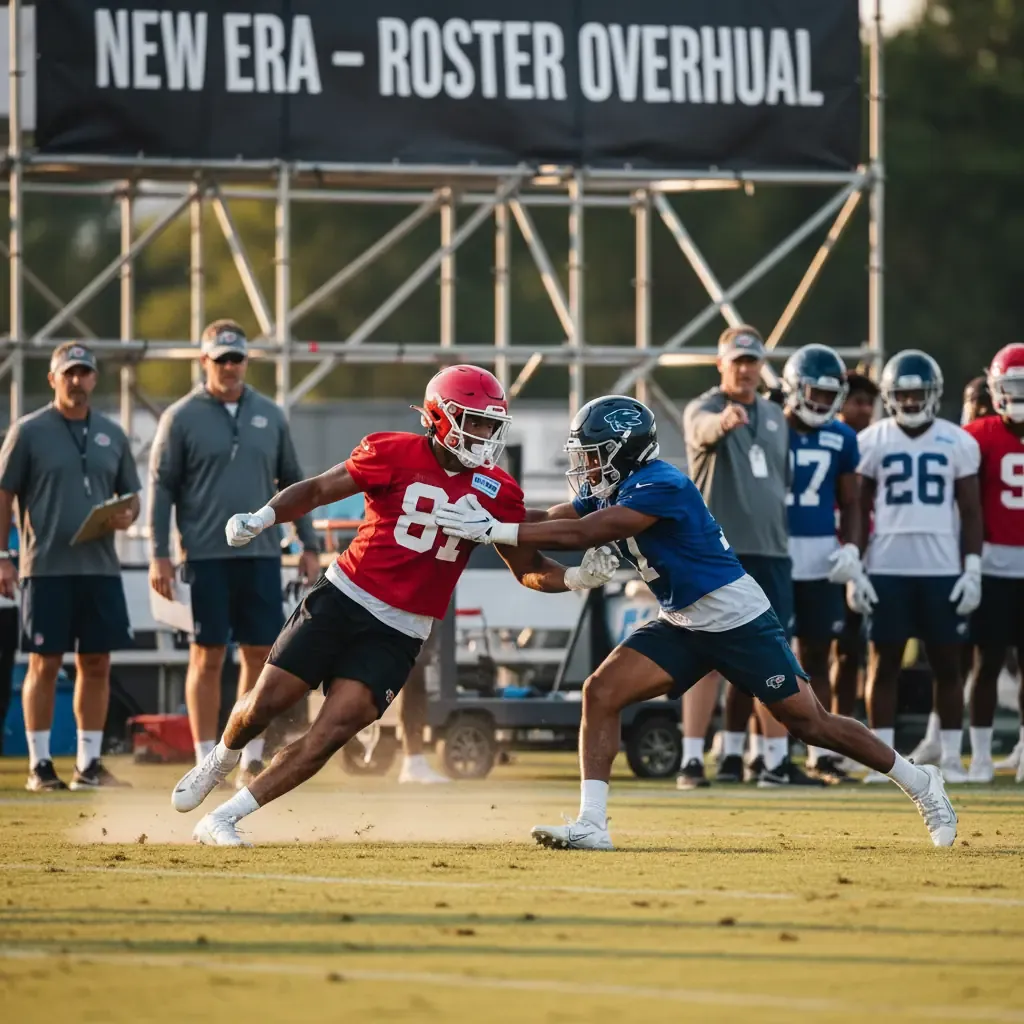
Conversely, players, even those with impressive resumes, may become expendable if their skill sets don’t mesh with the new coaching staff’s preferences. These decisions aren’t always easy, as they can involve releasing established veterans or trading away promising young talents. However, coaches often prioritize building a roster that fits their specific vision, even if it means making tough choices in the short term. The depth chart undergoes a significant transformation as the new staff molds the team to their liking, bringing in players who fit their scheme and releasing those who do not. This overhaul can be both exciting and unsettling for fans, as it signals a new era for the franchise and potentially alters the team’s competitive landscape.
Potential vs. Proven Performance
In the high-stakes world of professional football, few debates are as persistent as the one pitting NFL player potential against proven performance. Every team faces it, from draft day to final roster cuts: Do you gamble on the raw talent of a player with a high ceiling, or do you opt for the known quantity, the veteran who might lack superstar potential but delivers consistent results?
The allure of potential is undeniable. The dream of molding a raw prospect into a dominant force fuels countless draft-day decisions. But potential is just that – a possibility, not a guarantee. Sticking with a high-potential player who struggles to translate practice performance to game day is a gamble. The reward could be a game-changing talent, but the risk is wasted roster spot and missed opportunities with a more reliable player. Sometimes you are trading away future potential for a better now.
Proven players offer stability. Their track record provides a degree of certainty. What you see is generally what you get. However, relying solely on veterans can lead to stagnation. The team might become predictable.
Ultimately, successful roster construction requires a balanced approach. Teams that thrive often blend the excitement of developing potential with the reliability of proven performers. The real challenge lies in accurately evaluating potential, understanding the risks, and making the tough decisions that separate contenders from pretenders.
Future Impact and What to Expect
The NFL season is a constantly evolving beast, and predicting the future is a fool’s errand, but let’s peer into the crystal ball anyway. Expect a flurry of activity as teams assess their needs and the trade deadline approaches. Keep an eye on teams with surplus talent at one position potentially looking to shore up weaknesses elsewhere. Think running backs in crowded backfields or defensive linemen on teams with exceptional depth.
Trade rumors will swirl, fueled by team needs and player performance. The free agent market, though less active mid-season, could offer solutions for teams hit hard by injuries. Watch the waiver wire; it’s a goldmine for potential injury replacements and overlooked talent. Teams battling for playoff spots will aggressively pursue any edge they can find.
For fans, focus on position battles during training camp and early season games. Which young wide receiver will emerge as a reliable target? Which linebacker will seize the opportunity to start? Player performance is key. Keep tabs on players exceeding expectations and those struggling to find their footing. Injuries, as always, will play a massive role. A key injury can derail a season or create an opportunity for an unknown player to shine.
Ultimately, remember that the NFL is unpredictable. One week a team looks like a Super Bowl contender, and the next they’re spiraling out of control. These predictions are simply educated guesses. Enjoy the ride, because anything can happen.
Conclusion
The NFL’s roster cuts are an annual high-stakes drama, a whirlwind of dreams realized and deferred. From the undrafted free agent who defied the odds to make the team, to the veteran suddenly facing an uncertain future, these decisions ripple throughout the league. Think back to that nail-biting moment, waiting to see if your team’s gamble on that promising rookie paid off. That tension, that anticipation, is the essence of roster cutdown day.
Ultimately, understanding NFL roster cuts provides a crucial lens through which to view team building and strategy. These decisions are not just about trimming the fat; they’re about sculpting a competitive roster, managing the salary cap, and setting the stage for a successful season. As the final roster announcements echo throughout the league, remember that every cut, every kept player, is a piece of a larger puzzle, carefully assembled by coaches and general managers striving for gridiron glory. Roster cuts offer a window into the soul of a team, revealing its priorities, its risks, and its hopes for the season ahead. Keep a close eye on the names that rise and fall because, in the NFL, change is the only constant.